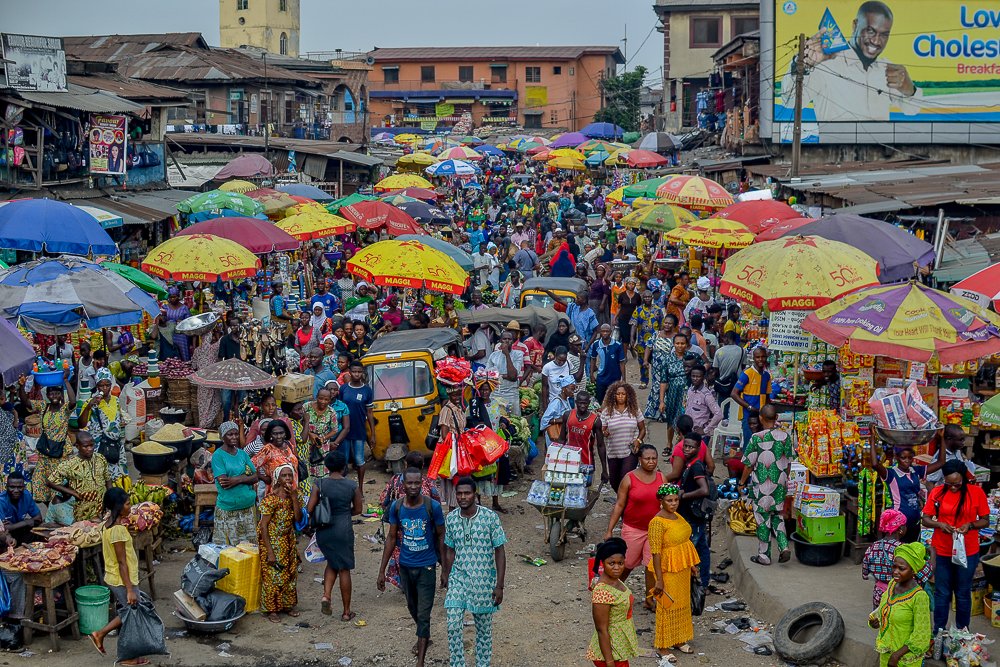

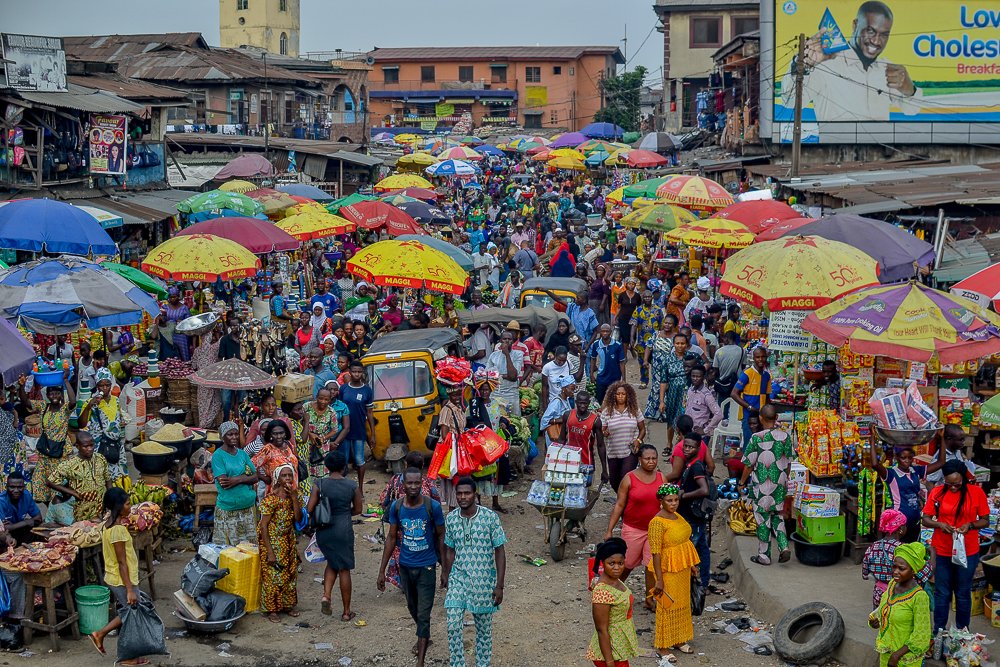
The shouting, the bargaining, the smells, the traffic of human bodies—it is all over the place. I strongly believe that every first-time belief is always both amusing and stressful.
These markets aren’t just places to buy and sell but lifelines. Some run the nation’s food supply, others move electronics across Africa, and a few feel like they exist in their own economy. There are millionaires in this market who control an entire chain of distribution.
So, the big question: Where do traders in Lagos really go? Let’s break it down.
1. Balogun Market – The Island Hustle
Balogun Market is chaos, but it’s the kind of chaos Lagos traders love. Located on Lagos Island, it spreads across streets that feel like they’ll never end.
For fabrics, Balogun is king. Everything moves here from aso-ebi for weddings to wholesale Ankara for resellers. Traders come because Balogun isn’t just about retail — it’s a hub for big deals. A single sale can supply an entire store in Ibadan, Port Harcourt, or even Accra.
Why traders go:
- Wholesale fabrics and clothing.
- Massive customer footfall.
- Connections to importers.
Pro tip: Balogun is crowded beyond belief, so traders who survive know how to move fast and negotiate harder.
2. Ladipo Market – Where Cars Come Alive
Imagine a sea of engines, car doors, bumpers, and mechanics yelling across narrow passages. That’s Ladipo Market in Mushin.
If Nigeria drives it, chances are Ladipo sold the parts. Traders here are specialists — from Toyota to Mercedes, they know what’s original, fake, or refurbished. The market isn’t just local; dealers across West Africa source car parts from Ladipo.
Why traders go:
- Auto spare parts (new & tokunbo).
- High turnover — cars break down daily.
- Cross-border sales.
Pro tip: Don’t go alone if you’re a first-time buyer. Traders know the real plug, and that makes all the difference.
3. Mile 12 Market – Feeding the City
When Lagos eats, Mile 12 is behind the scenes. This market is the city’s food hub, supplying tomatoes, peppers, yams, onions, fruits, and vegetables in bulk.
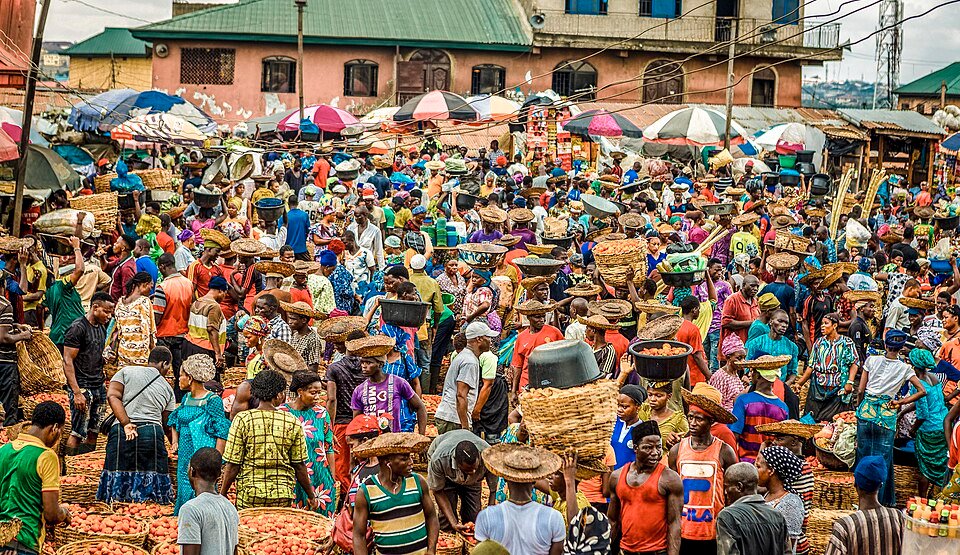
Almost every buka, restaurant, and supermarket gets stock from Mile 12. For traders, it’s not about fancy packaging but volume. A single morning at Mile 12 can move truckloads of food to different states.
Why traders go:
- Wholesale food supply.
- Nationwide distribution links.
- Daily demand — food never sleeps.
Pro tip: If you want to understand how Lagos eats, spend one morning at Mile 12. It’s not quiet or pretty, but it’s real.
4. Alaba International Market – Africa’s Electronics Hub
You hear Alaba before you see it: the echos of high-tuned loudspeakers, the unending noises of traders trying to make deals.
Alaba is one of the biggest electronics markets in Africa. TVs, fridges, speakers, generators — everything is on sale. Traders travel from Ghana, Benin, Togo, and beyond just to stock up here. The scale is massive, and deals run into millions daily.
Why traders go:
- Electronics and appliances.
- International trade network.
- Wholesale opportunities.
Pro tip: In Alaba, it’s all about trust. Traders build long-term supplier relationships, and one wrong deal can quickly ruin a reputation.
5. Computer Village – Tech Without Borders
If Alaba is for appliances, Computer Village is for everything digital. Located in Ikeja, this market is Nigeria’s Silicon Street.
Phones, laptops, accessories, software, and repairs are sold here. Traders love it because demand is endless; Nigerians upgrade devices constantly, and Computer Village is the first stop. It’s also where repair specialists build careers, turning technical skills into thriving businesses.
Why traders go:
- Phones, laptops, accessories.
- Repair services & reselling.
- Strong reseller network.
Pro tip: It’s easy to get overwhelmed. Traders know the trusted shops and avoid the scams. That’s insider knowledge at work.
What This Tells Us About Lagos
Lagos markets are more than buying and selling. They’re ecosystems. Each powers a different part of the city — fashion, cars, food, electronics, tech. Traders keep returning, not because it’s easy, but because Lagos offers opportunities that outweigh the stress.
After hours in the sun, shouting and bargaining, rest becomes non-negotiable. That’s why having a comfortable base, like Zimmr in Oshodi, matters. It’s central, quiet, and easy to reach the Island or Mainland markets. In Lagos, survival isn’t just about the hustle; it’s about knowing when to pause.
FAQ: Markets in Lagos
What is the biggest market in Lagos?
Balogun Market is one of the largest, especially for fabrics and wholesale clothing.
Where can I buy electronics in Lagos?
Alaba International Market and Computer Village are the go-to hubs.
Which market is best for food in Lagos?
Mile 12 Market is Lagos’ main food distribution centre.
Where do mechanics buy car parts in Lagos?
Most mechanics and auto dealers get their supplies from Ladipo Market.
Final Word
If Lagos is the heartbeat of Nigeria, its markets are the rhythm. Balogun, Ladipo, Mile 12, Alaba, and Computer Village aren’t just places traders visit. They are the city’s lifeblood.
For anyone visiting Lagos, even briefly, stepping into one of these markets shows you the real Lagos.
And when the noise gets too much? That’s where you need a place like Zimmr.